
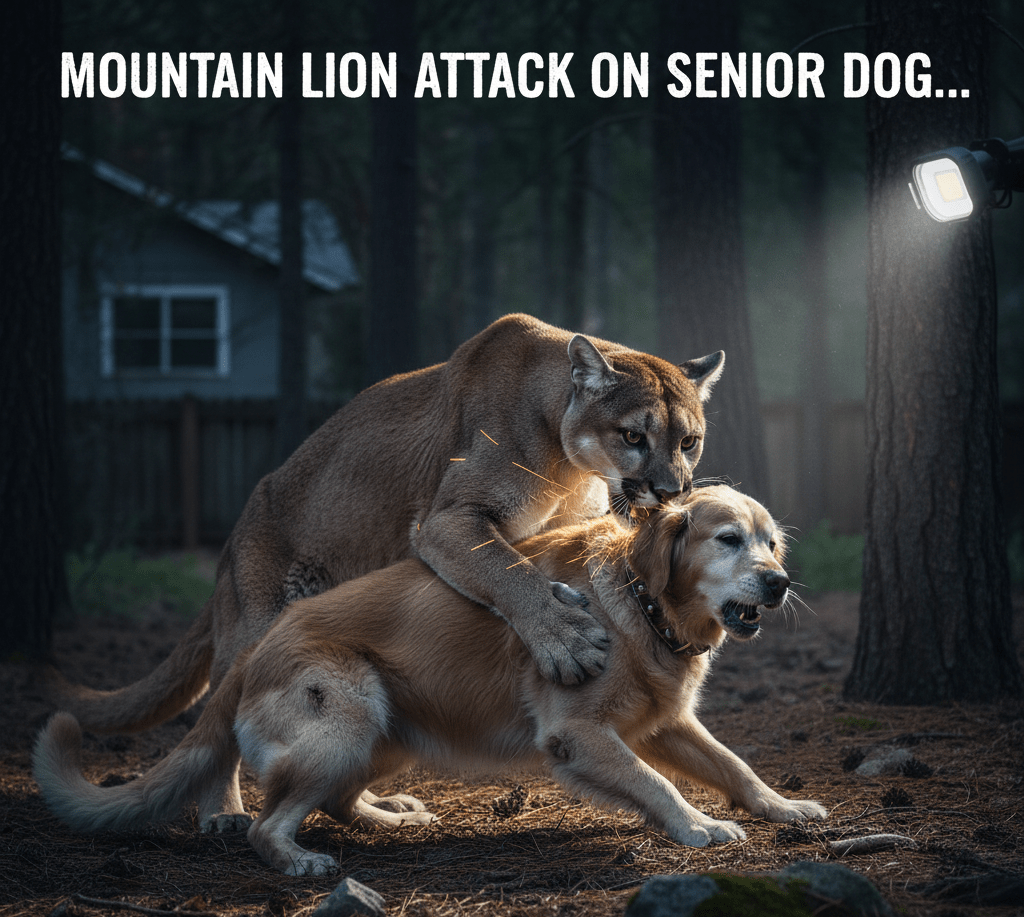
Imagine this: it’s a quiet, misty evening. You let your loyal, gray-muzzled companion out for one last potty break. Suddenly, the silence is shattered. For homeowners living near the wild edge of the foothills, the threat of a mountain lion attack on senior dog isn’t a horror movie plot—it is a legitimate safety concern.
Senior dogs are particularly vulnerable. They move slower, their senses aren’t as sharp as they once were, and they lack the physical stamina to fend off an apex predator. However, a mountain lion attack on senior dog doesn’t have to be your story. By understanding cougar behavior and fortifying your “home turf,” you can keep your golden-ager safe and sound.

Why Senior Dogs are “Soft Targets” for Cougars
Mountain lions, also known as cougars or pumas, are opportunistic hunters. They seek the route of minimal resistance. In the wild, they target the young, the sick, or the old. Unfortunately, your aging pet fits this biological profile.
- Decreased Mobility: A senior dog with arthritis can’t sprint to the door or jump a fence to escape.
- Muffled Senses: Declining eyesight and hearing mean a senior dog might not notice a lion stalking through the brush until it is too late.
- Lack of Aggression: Many older dogs have “retired” from their guarding duties and are less likely to perceive a stealthy predator as an immediate threat.
With close supervision, controlled outdoor time, and basic safety measures, senior dogs can remain safe even in mountain lion–prone areas.
Warning Signs: Is a Lion Stalking Your Property?
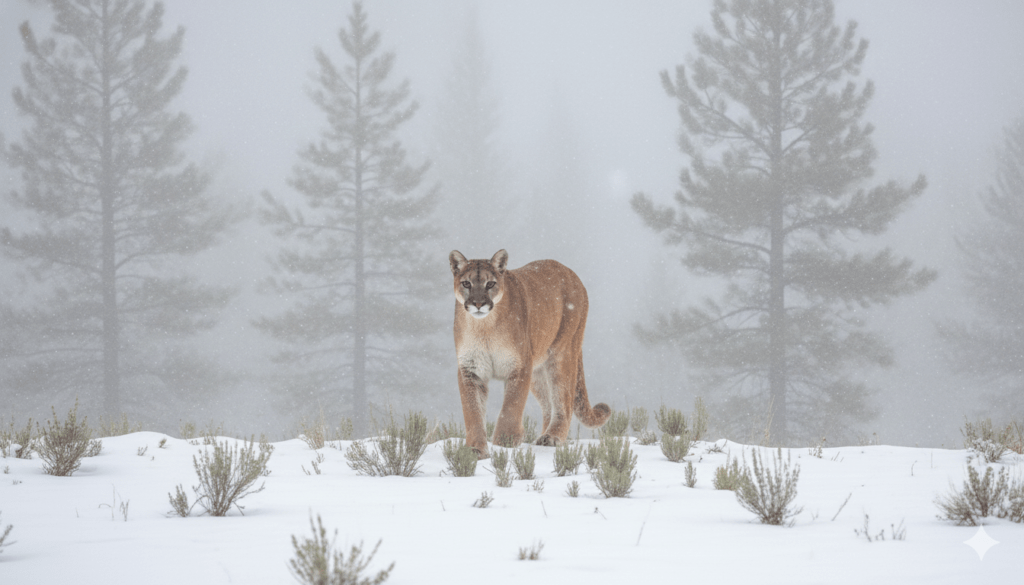
Before a mountain lion attack on senior dog occurs, there are usually signs that a big cat has claimed your yard as its territory. Serving as a “wildlife detective” has the potential to preserve your dog’s life.
1. The “Scrape”
Male lions mark their territory by creating a “scrape”—a pile of dirt, leaves, and twigs that they urinate or defecate on. If you find a neat pile of debris that smells strongly like a giant litter box, a lion is nearby.
2. Tracks vs. Paw Prints
How do you tell if that print in the mud is a neighbor’s Lab or a cougar?
- Mountain Lion: Four toes, a “M” shaped heel pad with three lobes at the bottom, and no claw marks (cats retract their claws).
- Dog: Two lobes on the heel pad and visible claw marks.
3. Food Caches
If you find a carcass (like a deer) partially buried under leaves or dirt, leave the area immediately. Lions “cache” their food and will defend it aggressively.
Recognizing these signs early allows homeowners to act proactively and prevent encounters long before a threat becomes real.
How to Prevent a Mountain Lion Attack on Senior Dog
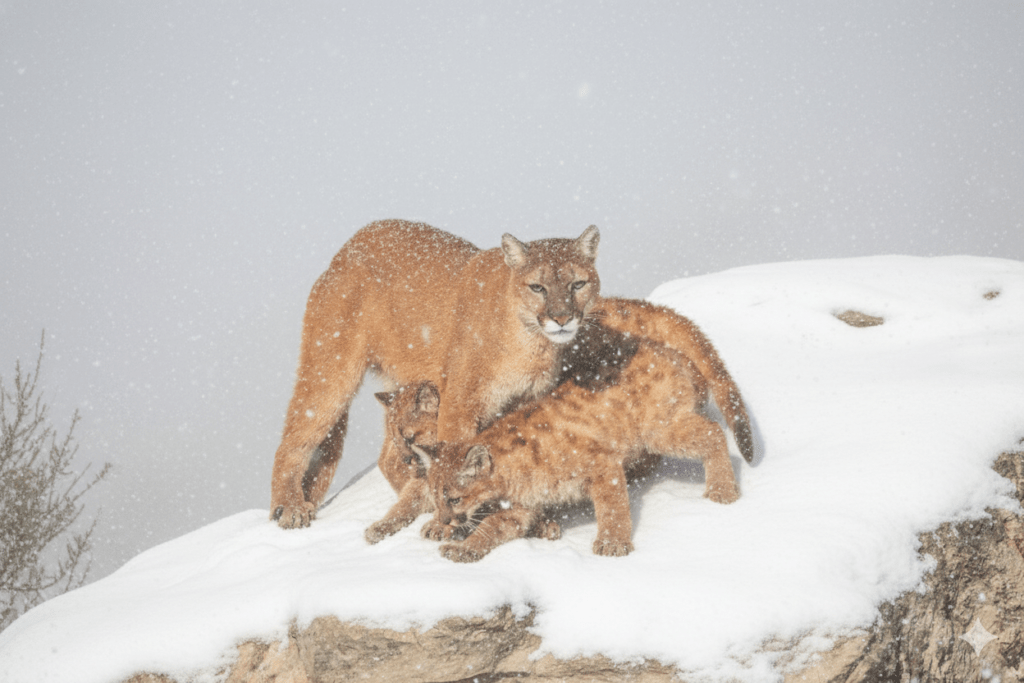
Prevention is the best medicine. There is no necessity to exist in fear; rather, it is essential to live intelligently.
| Prevention Strategy | Action Plan |
| Dusk to Dawn | Bring senior dogs inside. This is when lions are most active. |
| Landscaping | Trim low-hanging branches and tall brush where a cat could hide. |
| Motion Lighting | Install bright, motion-activated LED lights around the perimeter. |
| Perimeter Fencing | Use 6-to-10-foot fencing with an outward-leaning “coyote roller.” |
Pro Tip: Never leave pet food outside. You aren’t just feeding your dog; you’re attracting raccoons and deer—which are the primary “menu items” that bring mountain lions to your doorstep.
When these prevention strategies are followed consistently, the risk of a mountain lion attack drops significantly for most households.

What to Do During an Encounter
If you are walking your dog and find yourself staring into the yellow eyes of a cougar, do not run. Running triggers a cat’s “chase” instinct.
- Appear Massive: Open your jacket, raise your arms, and stand tall.
- Be Loud: Use a firm, “lion-tamer” voice. Do not scream in a high pitch; yell deeply.
- Maintain Eye Contact: Never turn your back. In the world of predators, eye contact means “I see you, and I am a threat.”
- Protect the Dog: If your dog is small, pick them up without bending over. If they are a large senior, keep them on a short leash behind you.
Most mountain lion encounters end without injury when humans stay calm, confident, and do not trigger a chase response.
Emergency Response: If an Attack Happens
you may like – The Mystery of Venezuela Dog Breeds – Mucuchíes – Why is the National “Snowy” Giant Not Everywhere?
If a mountain lion attack on senior dog occurs, the “rules” of nature change.
- Fight Back: If the lion has latched onto your dog, use anything at your disposal. Sticks, rocks, garden tools, or even your bare hands. People have successfully fended off lions by hitting them in the eyes or nose.
- Don’t “Play Dead”: This works for some bears, but never for mountain lions. If you are attacked, you must fight for your life and your dog’s life.
- Post-Attack Care: Even if your dog seems “fine,” a lion’s claws and teeth carry bacteria that can cause lethal infections. Take them to an emergency vet immediately for antibiotics and a thorough exam.
While rare, quick human intervention and immediate veterinary care greatly improve survival outcomes for senior dogs.

Frequently Asked Questions (FAQs)
Can a senior dog defend itself against a mountain lion?
Realistically, no. Even a large breed like a Great Dane or Mastiff is no match for the speed and power of an apex predator that kills elk for a living. Your dog relies on you to be the protector.
Do “spike collars” actually work?
Yes! Many owners in cougar country use “coyote collars” or spiked neck guards. Since lions typically go for the neck to crush the windpipe, a spiked collar can buy your dog precious seconds to escape or for you to intervene.
Is it legal to kill a mountain lion attacking my dog?
Laws vary by state (e.g., California vs. Colorado). Generally, you are allowed to use “reasonable force” to protect your property (pets). However, you must report the incident to Fish and Wildlife within 24–72 hours.
Does “lion urine” or “wolf urine” deterrent work?
The results are mixed. Sometimes it works; other times, it actually attracts a curious lion looking to defend its territory. Stick to physical barriers and lighting.
Conclusion
The thought of a mountain lion attack on senior dog is enough to keep any pet owner awake at night. But remember: mountain lions are naturally shy. They don’t want a fight; they want an easy meal. By securing your yard, walking with a sturdy stick, and keeping your old friend inside during the “witching hours” of dawn and dusk, you can enjoy the beauty of living in nature without the tragedy.
Share To HelpWith awareness, preparation, and simple daily habits, most pet owners will never experience a mountain lion encounter at all.